

 Best seller
 Best seller
Red Light Therapy for Hair Growth: The Complete UK Guide 2026
Hair loss affects roughly 6.5 million men and 8 million women in the UK by some recent estimates. The conventional options — minoxidil, finasteride, hair transplants — work for some but come with side effects, cost or commitment that puts many off.
Red light therapy (also called low-level laser therapy, or LLLT) has emerged as a credible drug-free alternative. It's FDA-cleared for hair loss treatment in the US, increasingly available in UK clinics, and now widely accessible at home via consumer LED panels.
But does it actually work? Here's what the research shows, which wavelengths matter, and how to use it correctly.
How Red Light Therapy Stimulates Hair Growth
Hair grows in cycles. The active growth phase — called anagen — typically lasts 2–7 years on the scalp. After anagen comes a transition phase (catagen) and a resting phase (telogen). When too many follicles get stuck in telogen, you see thinning.
Red light therapy works at the cellular level to:
- Energise dormant follicles — increased ATP production reactivates follicles stuck in telogen
- Improve blood flow to the scalp — better circulation means more nutrients delivered to active follicles
- Reduce scalp inflammation — chronic inflammation is a major driver of pattern hair loss
- Extend the anagen phase — keeping more follicles in active growth for longer
The key is reaching the dermal papilla — the structure at the base of each hair follicle. Wavelengths around 650nm and 810nm penetrate deep enough to do this consistently.
What the Clinical Evidence Shows
Red light therapy for hair growth is unusually well-researched for a wellness category. Some highlights:
- A 2014 randomised clinical trial in the American Journal of Clinical Dermatology found a 35% increase in hair growth for men using 655nm laser therapy over 16 weeks vs. placebo.
- A 2017 study in Lasers in Surgery and Medicine showed similar increases in hair density for women experiencing androgenetic alopecia.
- The FDA has cleared multiple LLLT devices for hair loss treatment — meaning the agency has reviewed the evidence and approved the technology as safe and effective.
- A 2020 systematic review concluded that LLLT was effective for both men and women with pattern hair loss, especially when started early.
The strongest results come from consistent use over 4–6 months. This isn't an overnight fix.
Which Wavelengths Work Best for Hair
For hair specifically, the research points to two wavelengths:
- 650–660nm (red light) — the most studied wavelength for scalp follicle stimulation
- 810–830nm (near-infrared) — better penetration to the dermal papilla, complements 650nm
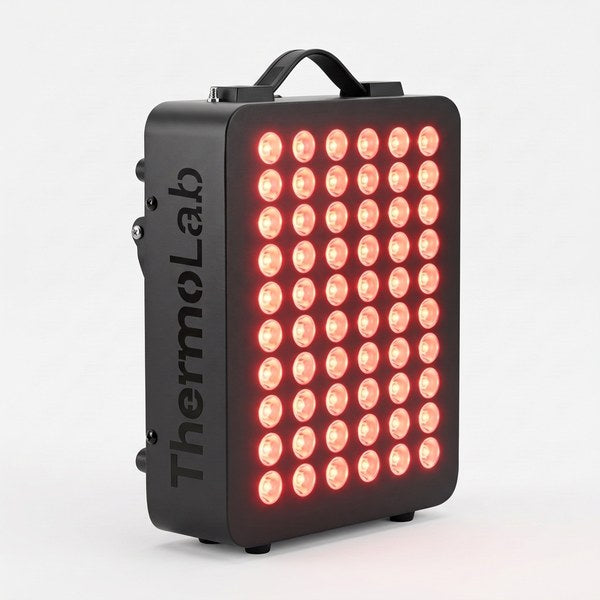
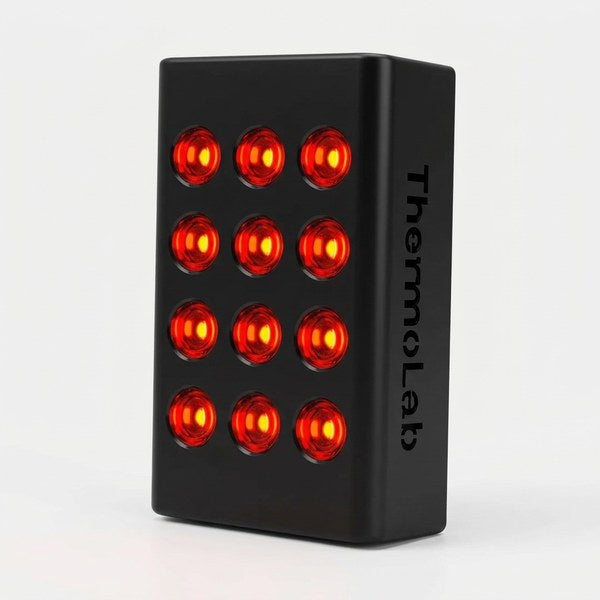
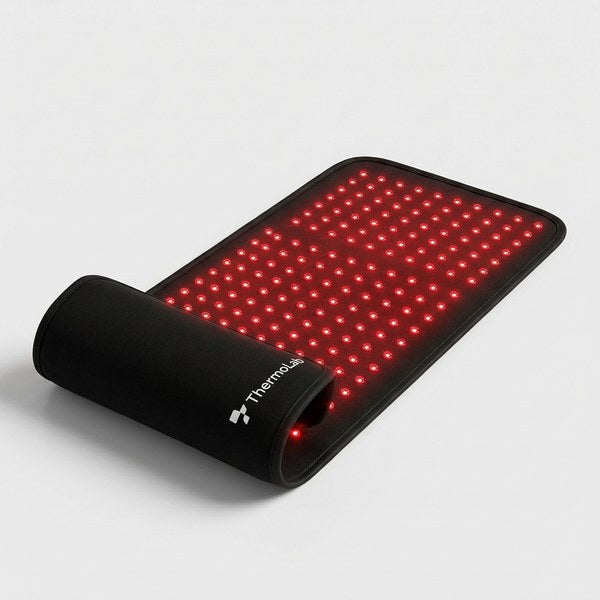
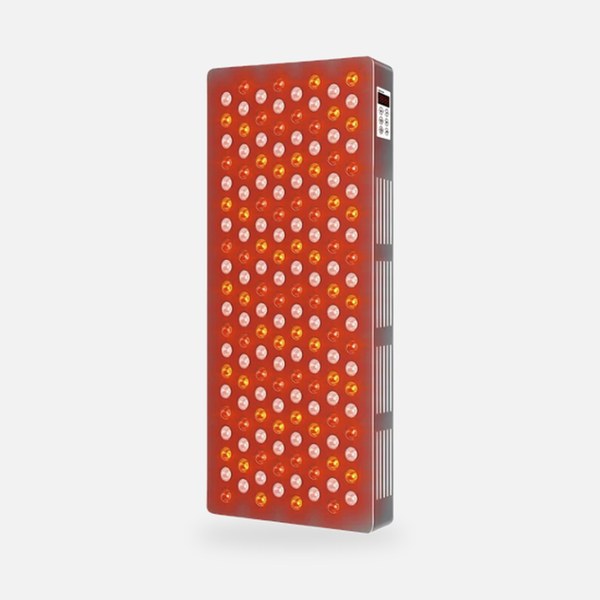
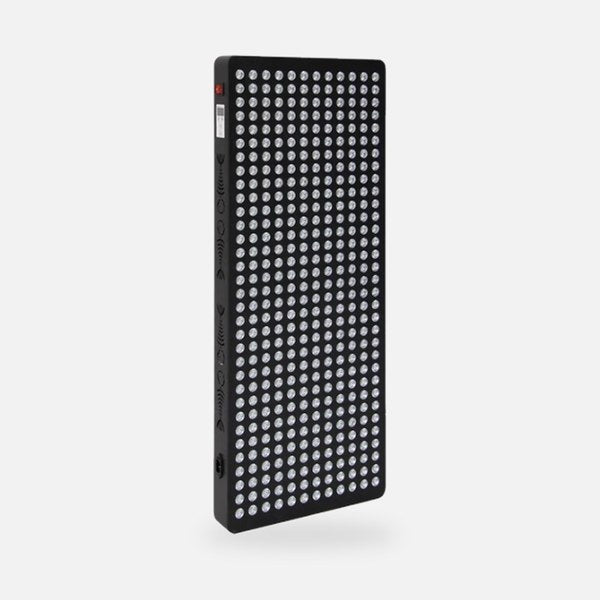
The ThermoLab A-Series panels cover both with their five-wavelength stack (630, 660, 810, 830, 850nm), making them well-suited for scalp use. The Aura Pro 300W covers the essential 660nm + 850nm pair if you want a simpler setup.
For face-and-scalp combined treatment, the Aura Pro LED Face Mask is another option, though it's primarily designed for facial skin treatment rather than scalp.
How to Use Red Light Therapy for Hair Growth
Like back pain treatment, protocol is everything. Most people who give up on RLT for hair haven't given it long enough or aren't using it correctly.
Distance: 6–12 inches between your scalp and the panel.
Time: 10–15 minutes per session, focused on thinning areas.
Frequency: 3–5 times per week, every week, for at least 4 months before evaluating results.
Best position: Sit or stand under the panel with the LEDs angled at the scalp. For diffuse thinning, move the panel to cover all areas.
What to skip: Hair products, oils or serums during the session — they can reflect or block light penetration. Apply them after.
What to Expect, Realistically
Here's an honest timeline based on the research:
- Weeks 1–4: No visible change. This is normal — cellular changes happen first.
- Months 2–3: Reduced shedding. You'll notice fewer hairs in the shower drain.
- Months 4–6: Early visible regrowth in thinning areas. Hair feels thicker.
- 6–12 months: Maximum density increase. Continue use for maintenance.
Red light therapy works best for early-stage androgenetic alopecia and diffuse thinning. It's less effective for completely bald patches where follicles have been dormant for years.
Best ThermoLab Device for Hair Growth
A few options depending on your setup:
- Best overall for hair: A-Series A60 or A80 — 5 wavelengths covering the optimal red and near-infrared spectrum, stand-mounted for easy scalp positioning
- Best entry-level: Aura Pro 300W — 660nm + 850nm, wall or stand-mountable
- Best for travel: Aura Mini Rechargeable — handheld, takes anywhere, can be moved around the scalp
Frequently Asked Questions
Will red light therapy regrow hair on a fully bald scalp?
Probably not. LLLT works by stimulating existing follicles. If follicles have been completely dormant for years, they're unlikely to respond. It works best for thinning and early-stage hair loss.
Can I use it alongside minoxidil or finasteride?
Yes — red light therapy is commonly combined with both. The mechanisms are different and they don't conflict. Many users report better results combining LLLT with one of these treatments.
Is it safe for women with PCOS or hormonal hair loss?
Generally yes. Red light therapy doesn't affect hormones. But discuss with your GP if you're being treated for an underlying condition.
How long do I need to keep using it?
For maintenance, indefinitely — much like minoxidil, the benefits last only while you use it. Stopping use means returning to your previous trajectory over the following 6–12 months.
The Bottom Line
Red light therapy is one of the best-researched drug-free options for hair growth. It's FDA-cleared, backed by clinical trials, and increasingly affordable at home.
It's not magic — you need to use it consistently for at least 4 months to evaluate results, and it works best on thinning hair rather than complete baldness. But for the right person, it's a credible non-prescription option with no known side effects.

