

 Best seller
 Best seller
Red Light Therapy UK: The Complete Beginner's Guide (2026)

Red Light Therapy UK: The Complete Beginner's Guide (2026)
Red light therapy went from clinical fringe to mainstream UK wellness in three years. Huberman, Attia, and Rhonda Patrick made it impossible to ignore; Amazon UK alone now lists over 1,200 red light panels; and the UK market is forecast to reach £1.32 billion by 2031. But most of what's written about it online is either oversold marketing copy or buried in academic papers no one will read.
This guide is the middle ground — the actual science, the wavelengths that matter, what to expect realistically in week 1, week 4 and week 12, and how to choose a panel that's properly built for UK home use.
What Is Red Light Therapy?
Red light therapy (also called photobiomodulation, or PBM) uses specific wavelengths of red and near-infrared light to stimulate cellular activity. The light is absorbed by your mitochondria — the energy-producing parts of your cells — which then produce more ATP (cellular energy). More ATP means faster cellular repair, better circulation, and a measurable change in inflammation and recovery markers.
It's not new. Photobiomodulation has been used in physio clinics and sports medicine for over 50 years. What's changed is the cost — LED panel manufacturing dropped by 90% between 2015 and 2024, which is why clinic-grade devices are now affordable for home use.
The Two Wavelengths That Matter: 660nm and 850nm
You'll see panels marketed with dozens of wavelengths — 630nm, 670nm, 810nm, 940nm. Marketing fluff. The two wavelengths backed by the deepest research are 660nm (Red) and 850nm (Near-Infrared).
- 660nm (Red Light): Penetrates 1-3mm into the skin. Targets the dermis. Supports collagen production, reduces the appearance of fine lines, helps with surface inflammation and skin healing.
- 850nm (Near-Infrared): Penetrates 4-5cm into muscle and joint tissue. Targets deeper structures. Supports muscle recovery, joint mobility, circulation, and the inflammatory response after training.
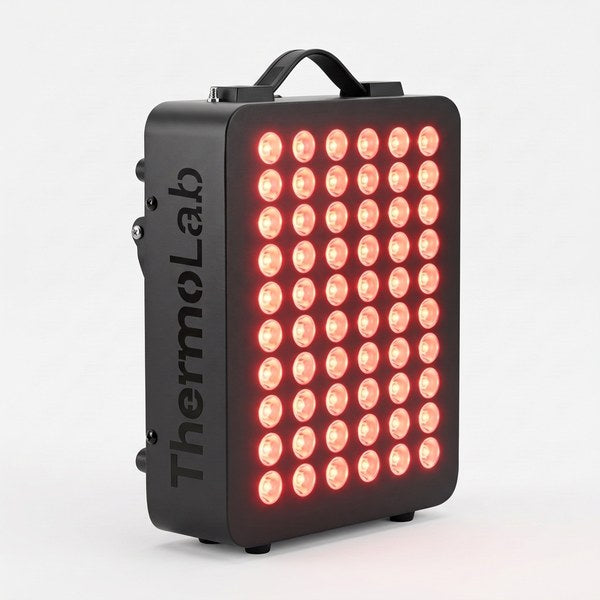
A proper panel includes both wavelengths together — typically in a 1:1 or 1:2 ratio. Panels with only one wavelength miss half the use case. The ThermoLab Aura Pro 300W uses 60 LEDs in a dual-wavelength configuration at 660nm + 850nm.
What Red Light Therapy Actually Does — Backed by Research
Here's what the research consistently supports, with realistic timelines:
Muscle Recovery and Performance
Pre or post-workout sessions (10-15 minutes) reduce DOMS (delayed onset muscle soreness) by 20-40% in studies. Athletes report measurably faster return-to-training. Visible in 1-2 weeks for active users.
Skin Quality and Collagen
660nm increases collagen production by 31% in 12-week studies. Visible changes in skin texture and fine lines appear at the 6-8 week mark with daily 10-minute sessions. Faster results when combined with consistent skincare.
Joint Pain and Stiffness
850nm penetrates deep enough to reach joints — useful for knee, shoulder, lower back pain. Most users report noticeable relief in 2-4 weeks of daily 15-minute sessions on the affected area.
Sleep Quality
Evening red light exposure (60-90 minutes before bed) supports natural melatonin production. Users typically report improved sleep onset and quality within 7-14 days.
Realistic Expectations: Week-by-Week
Week 1-2: No visible changes. Internal markers (inflammation, recovery) are improving but you won't see it.
Week 3-4: Muscle recovery noticeably faster. Sleep often improves.
Week 6-8: Skin texture and tone changes start showing. Joint discomfort reduces.
Week 10-12: Sustained changes in skin, recovery, and pain levels. This is the point where most users decide it's a permanent part of their routine.
If you're using a properly-built panel for 10-15 minutes daily, this is what to expect. Cheap underpowered panels deliver less than half the dose — and you'll see less than half the result.
How to Choose a Red Light Therapy Panel for UK Home Use
Three specs separate clinical-grade devices from cheap LED panels:
1. Wattage
Total panel wattage tells you how much light energy is hitting your body. Aim for at least 300W for a body-area panel, 800W+ for full-body coverage. Anything under 200W is decorative.
2. LED Count and Quality
60 clinical-grade LEDs at 5W each is more effective than 200 cheap 1W LEDs. Quality of the LED matters as much as the number.
3. EMF
Cheap panels emit measurable EMF at close range. Look for "low-EMF" certified construction — it's a real safety marker, not marketing fluff.
4. Certifications
For UK sale: CE + RoHS + FCC at minimum. UKCA preferred for post-Brexit compliance.
5. Warranty
If a brand offers under 2 years, they don't trust their own components. Most clinic-grade panels last 7-10 years. The ThermoLab Aura range carries a 3-year UK warranty across all models — the longest in the category.
Session Protocols That Actually Work
Three protocols cover 90% of use cases:
Recovery (muscle/joint): 10-15 minutes on affected area, 4-5 times per week, ideally within 2 hours post-workout.
Skin (face and neck): 10 minutes at 12-18 inches distance, daily or 5x per week. Best timing is morning or evening.
General wellness: 15-20 minutes full body coverage (rotate panel positions), 4-5 times per week. Evening sessions support sleep.
Don't exceed 30 minutes per area per day — more isn't better. The biphasic dose response means too much light shuts down the cellular benefit.
Common Mistakes to Avoid
- Sitting too far away: 12-18 inches is the effective range. Further than that and the light intensity drops off rapidly.
- Not using eye protection: 850nm is invisible to the eye but high-intensity exposure can affect retina cells. Use the blackout goggles supplied with the panel.
- Inconsistent use: 3 sessions per week consistently beats 7 sessions one week followed by zero the next.
- Buying based on price alone: A £50 panel will not deliver clinical doses. You're better off with no panel than a placebo one.
The ThermoLab Red Light Range
For UK buyers wanting clinical-grade panels with proper certifications and a real warranty, the ThermoLab range covers every use case:
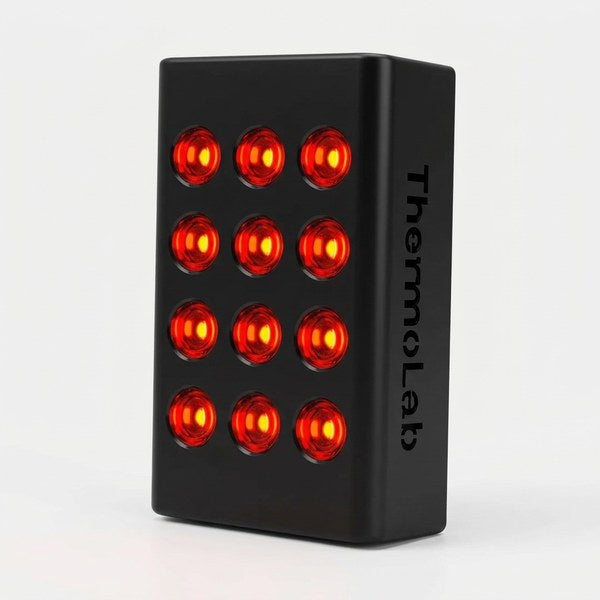
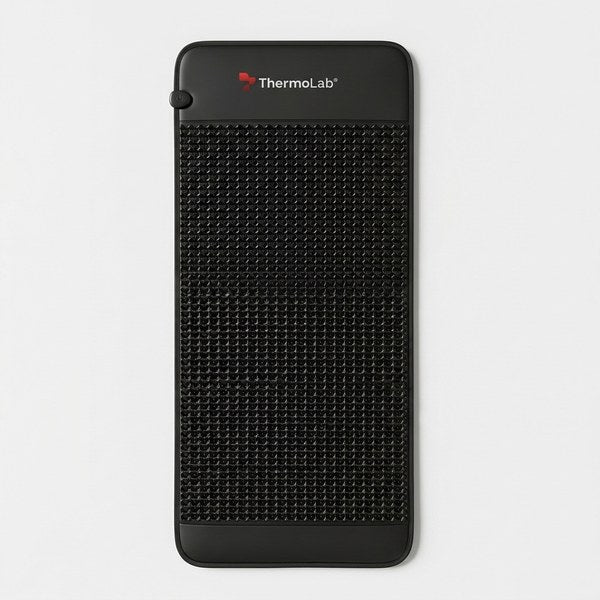
- Aura Mini Rechargeable — cord-free portable panel for travel and targeted use
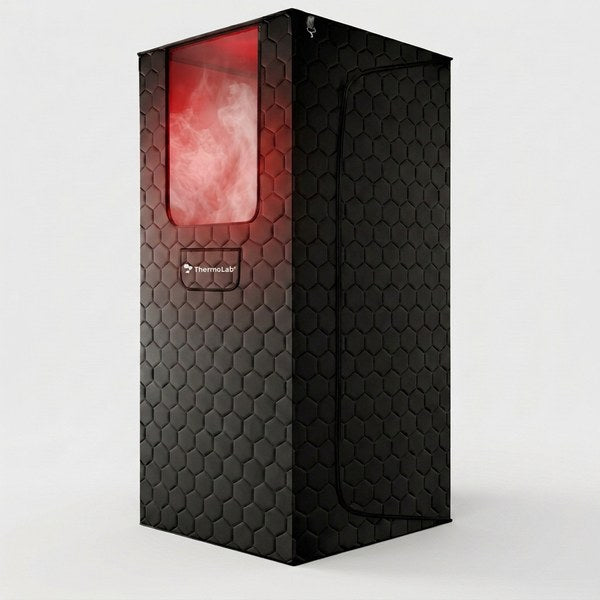
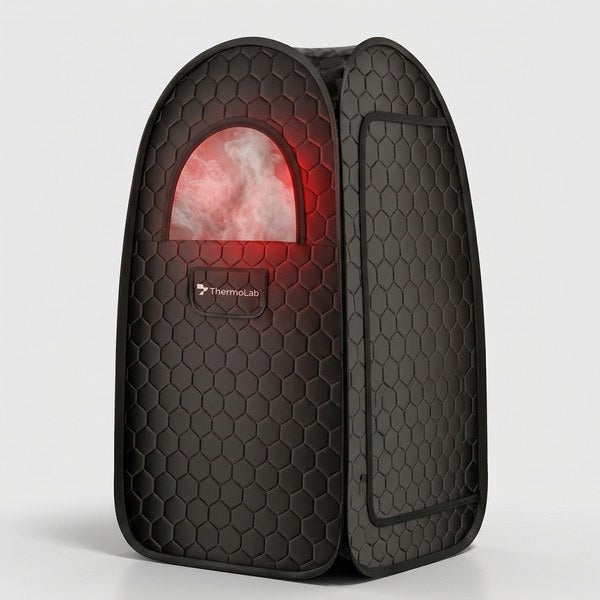
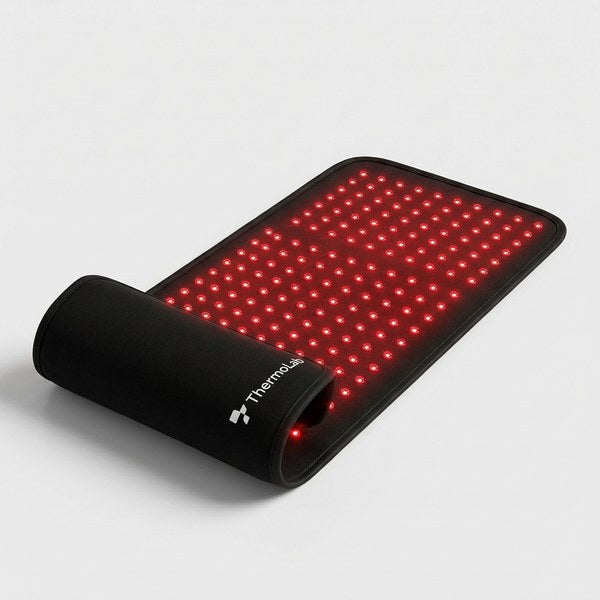
- Aura Pro 300W — body-area panel with free stand, door kit and goggles
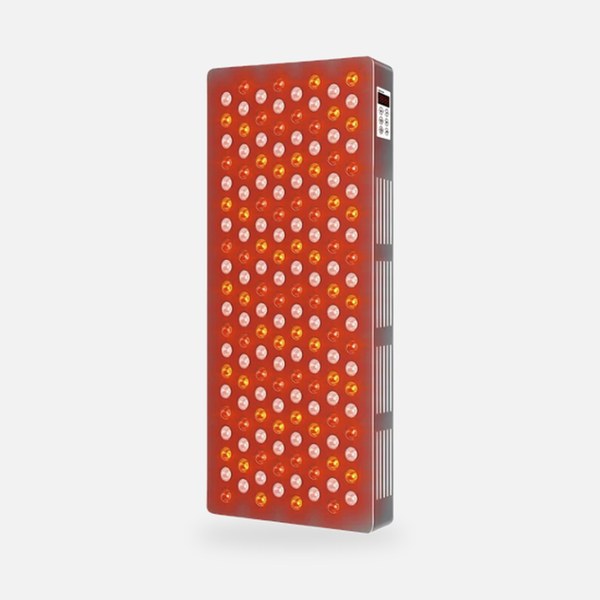
- A Series 300W-1600W — stepped panel range for full-body coverage
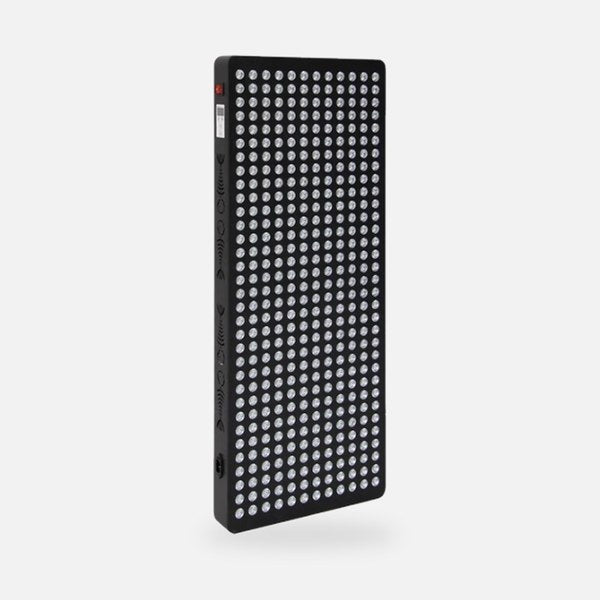
- S Series 1000W-5000W — high-power panels for serious daily users
Every panel is dual-wavelength (660nm + 850nm), low-EMF, CE + RoHS + FCC certified, and backed by a 3-year UK warranty with a real UK team behind it.
Frequently Asked Questions
How long until I see results from red light therapy?
Internal changes (inflammation, recovery) start within days. Visible changes (skin, joint relief) typically show at week 6-8 with daily 10-15 minute sessions.
Is red light therapy safe?
Yes for healthy adults. The 660nm and 850nm wavelengths used in home panels are the same spectrum as natural sunlight at sunrise. People on photosensitising medication or with active skin conditions should consult a GP first.
Can red light therapy help with hair growth?
Yes — red light at 660nm has FDA clearance for androgenetic alopecia. Most users report visible regrowth after 16-24 weeks of consistent use.
Should I use red light therapy in the morning or evening?
Morning sessions support alertness and circulation. Evening sessions support sleep and recovery. Both work — pick what fits your routine. Avoid bright sessions in the hour before bed if you're sensitive to light.
Do I need to be naked for red light therapy?
You need exposed skin on the area being treated, but you don't need to be fully undressed. Most users treat one area at a time.

