

 Best seller
 Best seller
Red Light Therapy for Back Pain: Does It Actually Work? UK Guide 2026
Back pain is the UK's leading cause of years lost to disability, with around 1 in 6 adults living with chronic lower back pain at any given time. The standard playbook — painkillers, NSAIDs, occasional physio — works for some, but leaves many looking for a drug-free, evidence-backed alternative.
That's where red light therapy comes in. Once confined to physio clinics and Olympic training rooms, near-infrared and red light panels have moved into homes thanks to clinical-grade LED technology that's now genuinely affordable.
This guide covers what the research actually shows, which wavelengths matter, how to use red light therapy for back pain correctly, and which ThermoLab device fits your situation.
How Red Light Therapy Works on Pain
Red light therapy — sometimes called low-level laser therapy (LLLT) or photobiomodulation — uses specific wavelengths of light (typically 660nm red and 810–850nm near-infrared) to penetrate the skin and reach muscle, joint and connective tissue.
Inside your cells, that light is absorbed by the mitochondria — the energy plants of the cell. The result is a measurable boost in ATP production (cellular energy), reduced oxidative stress, and an anti-inflammatory cascade. In plain English: your cells get more fuel and produce fewer of the inflammatory signals that make back pain feel worse.
For back pain specifically, three mechanisms matter:
- Reduced inflammation at the injury or strain site
- Improved blood flow to muscles and intervertebral tissues
- Faster cellular repair in connective tissue, ligaments and nerves
Crucially, near-infrared (NIR) light at 810–850nm penetrates several centimetres into the body — deep enough to reach lumbar muscles and even the spine itself.
What the Research Says
The body of evidence on red light therapy for musculoskeletal pain has been growing for two decades. A few key findings:
- A 2018 systematic review in Lasers in Medical Science analysed 22 studies on LLLT for chronic low back pain. Most showed significant pain reduction and improved function vs. placebo.
- A 2012 study in The Clinical Journal of Pain found that LLLT applied to the lumbar region reduced pain by an average of 31% over four weeks.
- More recent work has confirmed that dual-wavelength devices (660nm + 850nm) outperform single-wavelength devices for deeper tissue work, which matters for back pain.
What red light therapy is not: a cure for structural problems like a herniated disc, severe scoliosis or spinal stenosis. Those need medical management. But for muscular back pain, post-injury stiffness, lumbar inflammation and recovery from training, the evidence supports it as a credible drug-free tool.
Which Wavelengths Work Best
If you're shopping for a red light device specifically for back pain, look for two wavelengths in particular:
- 660nm (red light) — penetrates 5–10mm, ideal for the muscles closest to the skin
- 850nm (near-infrared) — penetrates up to 5cm, reaches deeper tissues including the lumbar spine and connective tissue
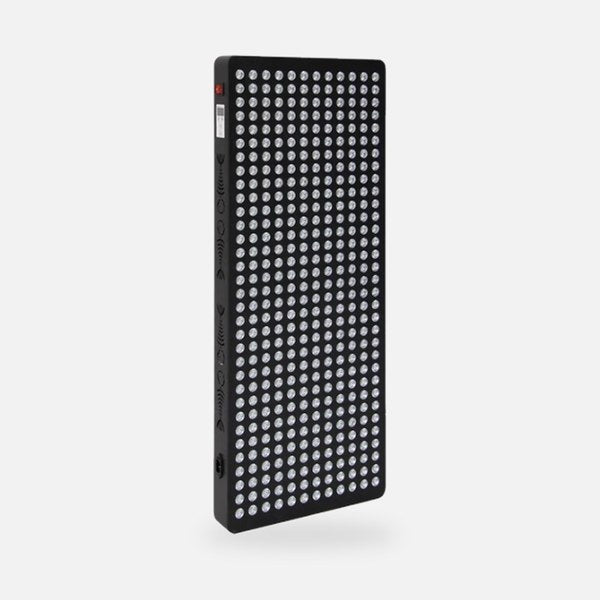
Some pro-grade panels go further, layering in 630nm, 810nm and 830nm. The ThermoLab A-Series panels offer this five-wavelength coverage — useful if you want one device that handles back pain, skin and recovery simultaneously.
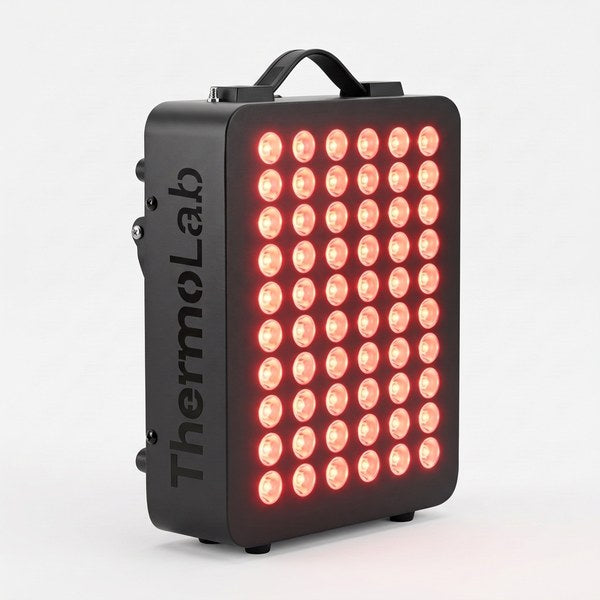
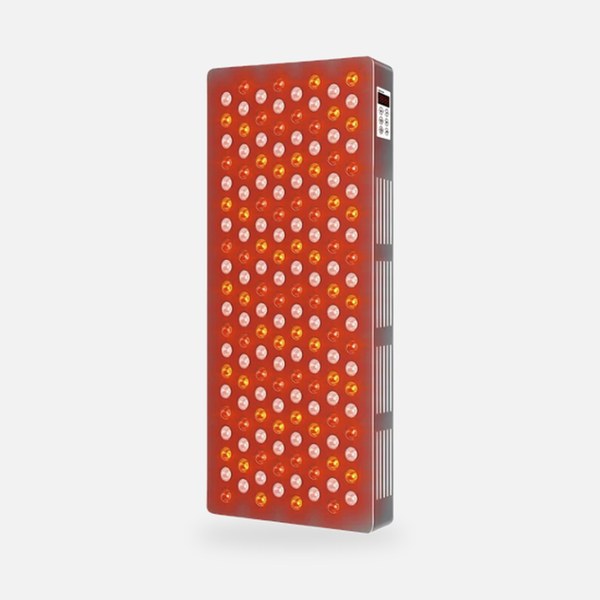
For a simpler dual-wavelength stack, the Aura Pro 300W or portable Aura Mini cover the two wavelengths that matter most.
How to Use Red Light Therapy for Back Pain
Protocol matters. Most people who try red light therapy and don't see results have made one of three mistakes: standing too far away, treating for too little time, or quitting too soon.
Distance: 6–12 inches (15–30cm) from your back. Closer for shorter sessions, further for longer ones.
Time: 10–20 minutes per session, focused on the painful area.
Frequency: 5 times per week minimum. Pain reduction is cumulative — the cellular benefits compound over 4–6 weeks.
Position: Lie face-down with the panel positioned over your lower back, or stand with your back to a wall-mounted or stand-mounted panel.
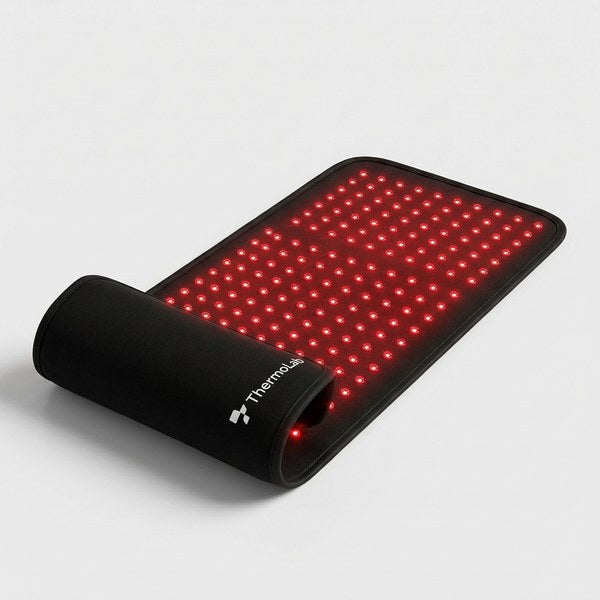
For mobility — say, if you want to treat a sore back at your desk or in bed — a portable belt is far more practical than a fixed panel. The ThermoLab Auracell Pro Red Light Therapy Belt is a wearable 24×12 belt with red and infrared LEDs that wraps directly around the lower back. You can use it while working, watching TV or before bed.
Best ThermoLab Device for Back Pain
If you want a single recommendation based on what tends to work best:
- For severe or chronic back pain at home: A-Series A160 or A240 — half-body coverage, 5 clinical wavelengths, longer sessions
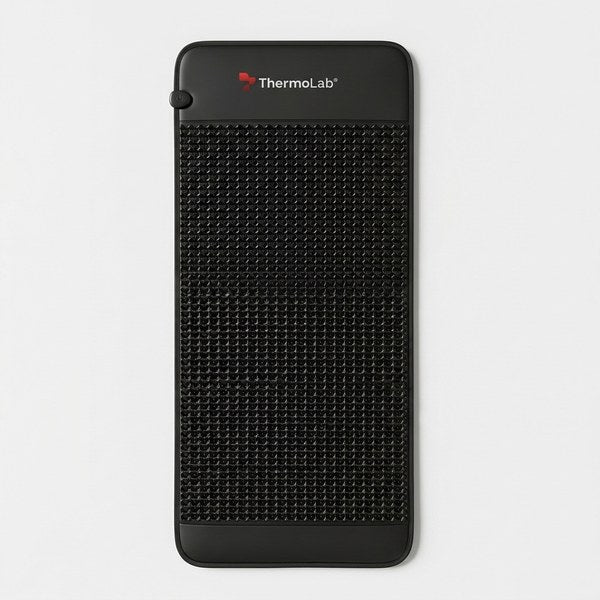
- For occasional back pain + general wellness: Aura Pro 300W — wall-mounted or stand-mounted, 60 LEDs at 660nm + 850nm
- For targeted relief on the go: Auracell Pro Light Therapy Belt — hands-free wearable, perfect for desk workers
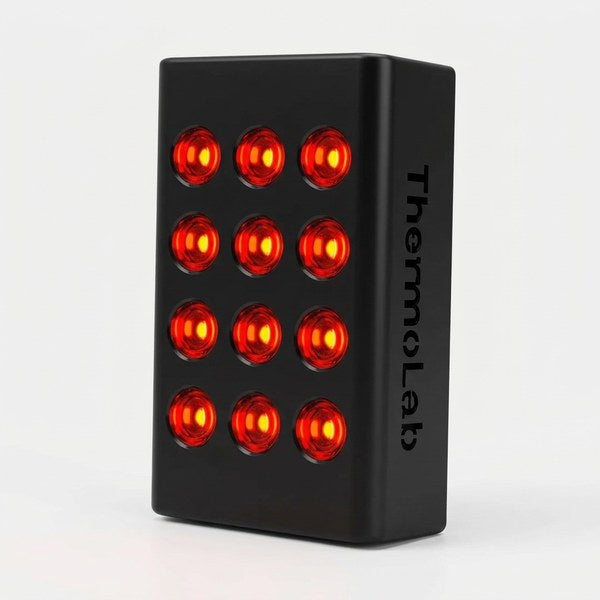
- For portable spot treatment: Aura Mini Rechargeable — point at the painful spot anywhere
Frequently Asked Questions
How long before I see results?
Most users notice some pain reduction within the first 2 weeks of consistent use, with significant improvements at 4–6 weeks. Cellular adaptation takes time — be patient.
Is red light therapy safe?
Yes — non-thermal, non-UV, and one of the most-researched safe-light therapies. No known long-term side effects. Wear blackout goggles for any session targeted at the upper body.
Can I combine red light therapy with painkillers or physio?
Yes — it complements both. Many users report being able to reduce painkiller dependency over time but you should discuss this with your GP.
Should I do it before or after exercise?
Both work. Pre-workout improves circulation; post-workout aids recovery. For chronic back pain, evening sessions tend to feel best.
The Bottom Line
Red light therapy is a credible, drug-free option for muscular and inflammatory back pain — backed by 20+ years of clinical research and increasingly accessible at home. It's not a cure-all, and it works best when used consistently over weeks rather than days.
If you've tried painkillers, physio and stretching without lasting results, a dual-wavelength panel or wearable belt is worth the trial. Most ThermoLab devices come with a 30-day return policy and 3-year UK warranty, so the downside is minimal.

