

 Best seller
 Best seller
Red Light Therapy for Back Pain: Does It Work? UK Guide 2026

Red Light Therapy for Back Pain: Does It Actually Work? UK Guide 2026
Back pain affects 1 in 3 UK adults at any given time. The NHS spends £2.1 billion a year on back pain treatment, and waiting lists for physiotherapy and pain clinics keep growing. Most people end up self-managing with painkillers, hot packs, and hope. Red light therapy has emerged as a third option — backed by a growing body of clinical evidence, accessible at home, and used in physio clinics across the UK.
This guide is honest: what the research actually shows, who it works for, who it doesn't, and how to use a red light panel at home for chronic and acute back pain.
How Red Light Therapy Works on Pain
Two wavelengths matter for pain relief: 660nm Red light (penetrates 1-3mm into skin) and 850nm Near-Infrared (penetrates 4-5cm into muscle and joint tissue). For back pain, 850nm is the workhorse — it reaches the lumbar muscles, surrounding fascia, and the small joints between vertebrae.
The mechanism: light is absorbed by your mitochondria, which produce more ATP (cellular energy). More ATP means faster repair of damaged tissue, reduced inflammation, and increased blood flow to the area. Unlike painkillers, this addresses the underlying cause rather than masking the symptom.
What the Research Actually Shows
Photobiomodulation has been studied for musculoskeletal pain for over 30 years. The consistent findings:
- Chronic lower back pain: Studies show 20-50% reduction in pain scores after 8-12 weeks of regular sessions.
- Muscle stiffness: Improvement typically visible within 2-4 weeks.
- Post-injury recovery: Faster return-to-activity vs no treatment, particularly for soft tissue strains.
- Combined with movement: Best results come from combining red light with stretching, walking, or physio exercises — not from light therapy alone.
Red light therapy is not a magic cure. It works alongside movement and good posture, not instead of them.
What It Won't Fix
Honesty matters. Red light therapy is not appropriate for:
- Slipped discs or sciatica with active nerve compression (see a GP first)
- Structural spinal problems (scoliosis, severe degeneration)
- Pain from infection or cancer-related causes
- Acute injuries within the first 48-72 hours (use ice first, then introduce red light)
If your back pain is severe, sudden, accompanied by leg weakness, numbness, or bladder issues — see a doctor immediately. Red light therapy is for chronic muscle/joint pain, not red-flag symptoms.
How to Use Red Light Therapy for Back Pain at Home
Equipment
You need a panel with both 660nm and 850nm wavelengths. For back pain specifically, prioritise:
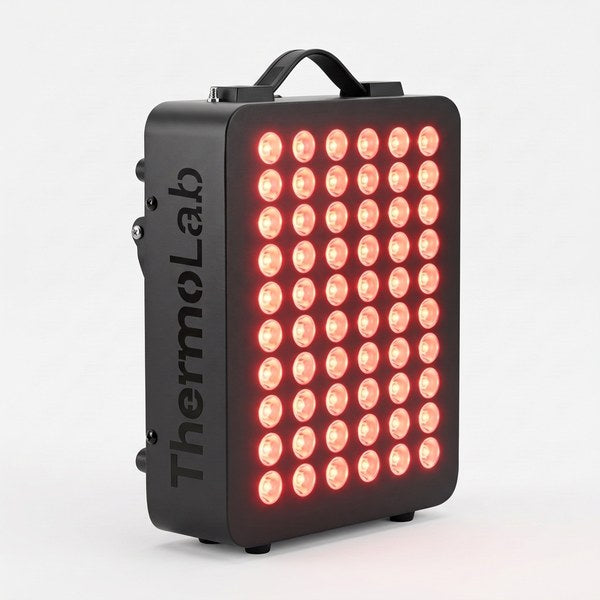
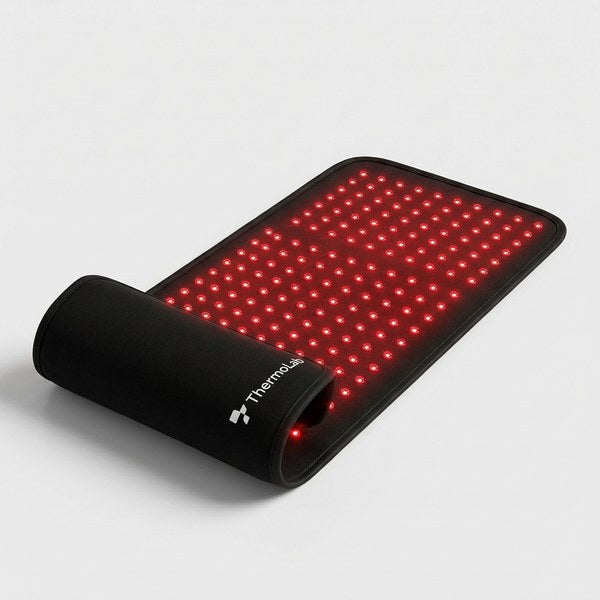
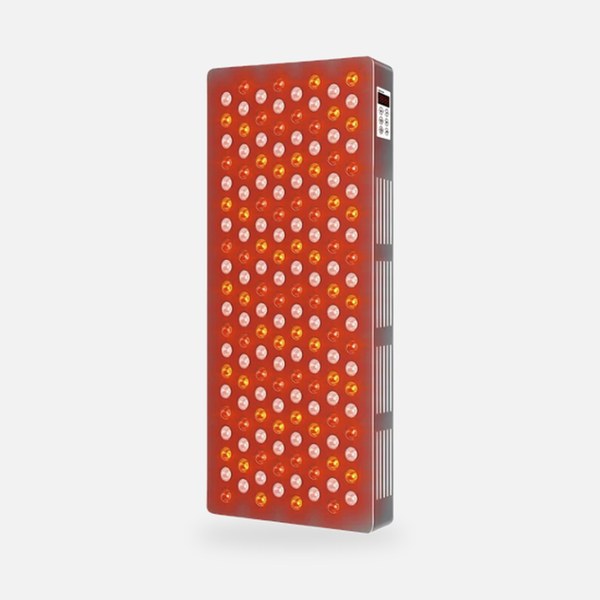
- Wattage: Minimum 300W for body-area treatment. Higher wattage = shorter session times. The ThermoLab Aura Pro 300W is the most popular UK choice in this range.
- Beam angle: 60° spread covers the lumbar region effectively at 12-18 inches distance.
- Hands-free mounting: Look for a panel with a door suspension kit so you can stand or lie down without holding it. The Aura Pro 300W includes this free.
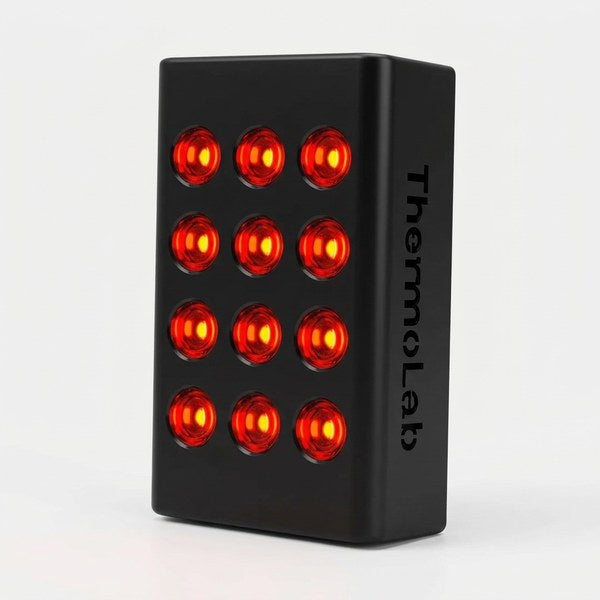
- Targeted spot treatment: For specific knots or trigger points, a portable handheld like the Aura Mini can target precisely.
Session protocol for lower back pain
- Position: Lie face-down or stand with the panel positioned 12-18 inches from your bare lower back.
- Duration: 10-15 minutes per session for first 2 weeks, building to 20 minutes.
- Frequency: 4-5 times per week consistently. More isn't better.
- Best timing: Evening sessions before bed support overnight tissue repair. Morning sessions support mobility for the day.
- Combine with movement: Gentle walking, cat-cow stretches, or hip-opening exercises immediately after each session amplifies the effect.
Realistic timeline
Week 1-2: Possible reduction in stiffness on waking. Pain scores may not change yet — inflammation is reducing internally.
Week 3-4: Most users report 20-30% pain reduction. Sleep often improves as nighttime pain decreases.
Week 6-8: Compound effect. Pain reduction often plateaus around 40-50% for chronic users.
Week 10-12: Sustained improvement. Many users drop to 3 sessions per week for maintenance.
Sauna Therapy as a Complement to Red Light
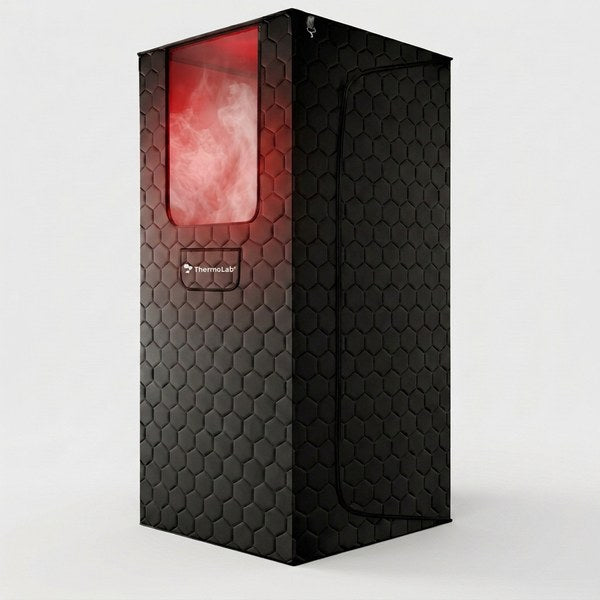
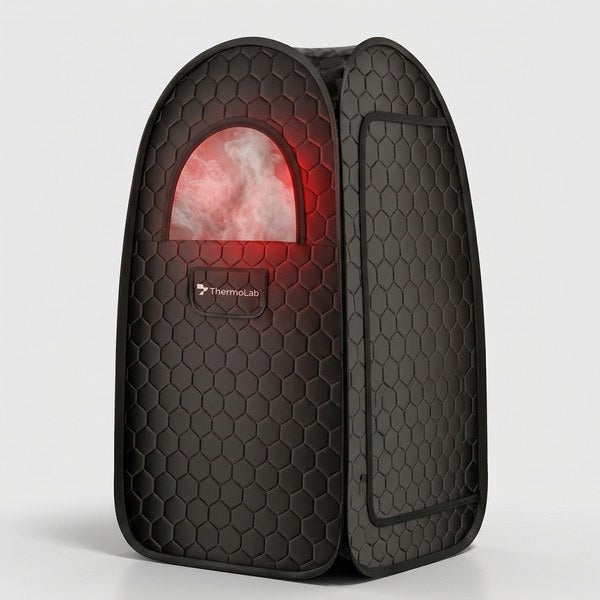
Heat therapy and red light work through different mechanisms but complement each other for back pain. A 30-minute sauna session before red light therapy increases blood flow to the area, making the photobiomodulation more effective. The combination of heat + infrared light + gentle movement is the strongest at-home protocol for chronic lower back pain.
For a full-body approach, see our UK infrared sauna buyer's guide. For the science behind red light wavelengths, see our beginner's guide to red light therapy.
Common Mistakes to Avoid
- Sitting too far away. 12-18 inches is the effective range. Further than 24 inches and the intensity drops off too much.
- Treating through clothing. Light needs to reach bare skin. Clothing absorbs the wavelengths.
- Stopping after 2 weeks. Most users see real change at week 3-4. Don't give up early.
- Static positioning. Move the panel to cover different areas of the lower back across sessions — left, centre, right.
- Underpowered devices. A £30 LED "red light" lamp from Amazon is not red light therapy. You need 300W+ clinical-grade wavelengths.
When to See a Professional
Red light therapy is best for chronic, low-grade muscle and joint pain. See your GP or a physiotherapist if you experience:
- Sudden severe back pain with no obvious cause
- Pain that radiates down the leg with numbness or weakness
- Loss of bladder or bowel control (this is a red-flag emergency)
- Pain following a fall, accident, or impact
- Persistent pain that doesn't improve after 6 weeks of consistent red light use
Frequently Asked Questions
How long until red light therapy reduces back pain?
Most UK users report measurable improvement within 3-4 weeks of consistent daily 10-15 minute sessions. Chronic cases may need 8-12 weeks to see major change. Inflammation reduces internally before pain scores drop, so don't judge by week 1-2.
Is red light therapy safe for back pain?
Yes for healthy adults. The 660nm and 850nm wavelengths used are the same spectrum as natural sunlight at sunrise. No known side effects from home-use doses. People on photosensitising medication, with active skin conditions on the treatment area, or with pacemakers should consult their GP first.
Can I use red light therapy alongside painkillers or physio?
Yes. Red light therapy works alongside conventional treatments, not as a replacement. It complements physiotherapy, NSAIDs, and movement therapy. Many UK physios now recommend home red light panels as adjuncts to in-clinic treatment.
What's the best red light therapy panel for back pain in the UK?
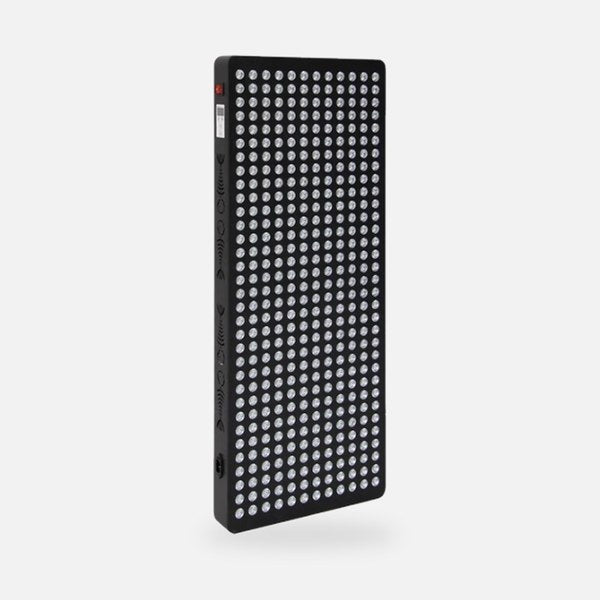
For most home users, a 300W dual-wavelength panel covers the lower back effectively. The ThermoLab Aura Pro 300W (£159.99) is the value pick — includes a free door suspension kit so you can use it standing or lying without holding it, plus a 3-year UK warranty. For full-body coverage or both back and shoulders simultaneously, the higher-wattage S Series panels deliver stronger output.

