

 Best seller
 Best seller
Hot and Cold: The Complete Guide to Sauna and Cold Plunge Contrast Therapy
If you've spent any time in wellness communities recently, you've probably noticed contrast therapy trending hard. The combination of heat exposure (typically a sauna) followed by cold water immersion has been championed by elite athletes, longevity researchers, and biohackers alike — and for good reason. The physiology behind it is compelling, and the growing body of research supports many of its claimed benefits.
Here's everything you need to know about contrast therapy: how it works, what it actually does to your body, and how to run a protocol that gets real results.
What Is Contrast Therapy?
Contrast therapy is the deliberate alternation between heat and cold exposure. Traditionally practised in Scandinavian and Eastern European sauna culture for centuries, it has more recently been formalised into structured protocols by sports science and recovery research.
The most common version involves:
- A session in a sauna or heat chamber (10–20 minutes)
- Followed immediately by cold water immersion — a cold plunge, ice bath, or cold shower (1–5 minutes)
- Repeated for 2–3 cycles
Some protocols include a rest period at room temperature between heat and cold; others move directly from one to the other. The evidence suggests both approaches are effective, with direct transitions producing a more intense physiological response.
What Happens in Your Body
During heat exposure: Core body temperature rises, triggering a cascade of responses: blood vessels dilate (vasodilation), heart rate increases, plasma volume expands, and heat shock proteins are activated. Endorphins and noradrenaline are released. The parasympathetic nervous system is somewhat suppressed in favour of the sympathetic response.
During cold exposure: The opposite occurs. Blood vessels constrict rapidly (vasoconstriction), pulling blood away from extremities and towards the core. Noradrenaline spikes dramatically — studies show 300–500% increases with full-body cold immersion. Cold shock proteins are activated. Dopamine levels rise significantly and remain elevated for hours.
The contrast effect: This rapid cycling between vasodilation and vasoconstriction acts like a physiological pump, dramatically improving circulation. Blood is pushed through capillaries and microvascular networks more forcefully than during either heat or cold alone. Metabolic waste products are cleared, oxygenated blood is delivered to recovering tissue, and lymphatic drainage is stimulated.
Evidence-Based Benefits of Contrast Therapy
Faster Muscle Recovery
A 2017 meta-analysis in the British Journal of Sports Medicine found that contrast water therapy was among the most effective recovery modalities for reducing muscle soreness in the 24–72 hours following intense exercise, outperforming passive rest and compression. The rapid vascular cycling appears to accelerate the clearance of lactic acid and inflammatory mediators from exercised muscle tissue.
Reduced Inflammation
Both heat and cold independently reduce markers of systemic inflammation. Used together in cycles, contrast therapy amplifies this effect. Reduced levels of IL-6, CRP, and other pro-inflammatory markers have been documented following contrast therapy protocols in several sports science studies.
Mental Health and Stress Resilience
The noradrenaline spike from cold exposure, combined with endorphin and heat shock protein release during the sauna phase, produces a powerful neuroendocrine response. Regular contrast therapy has been associated with reduced anxiety, improved mood, and increased stress resilience — likely through repeated hormetic stress that gradually recalibrates the nervous system's baseline reactivity.
Cardiovascular Conditioning
Regular sauna use alone has been shown in the Finnish KIHD study (following over 2,000 participants for 20 years) to be associated with significantly reduced rates of cardiovascular disease. Cold exposure adds vasoconstriction training to the equation. The combination appears to produce cardiovascular adaptations comparable to moderate aerobic exercise in some measures.
Improved Sleep
The post-sauna drop in core body temperature — especially when followed by cold exposure — mimics the thermal conditions that trigger deep sleep onset. Many practitioners report significantly improved sleep quality with regular evening contrast sessions.
How to Run a Contrast Therapy Protocol
You don't need a purpose-built facility. A home sauna paired with a cold shower or outdoor cold water source is sufficient to achieve meaningful physiological responses.
Basic protocol (3 cycles):
- Cycle 1: 10 minutes sauna → 1 minute cold shower/plunge → rest 2 minutes
- Cycle 2: 10 minutes sauna → 2 minutes cold → rest 2 minutes
- Cycle 3: 10 minutes sauna → 2–3 minutes cold → finish
End with cold if recovery is the goal. End with heat if you want relaxation and improved sleep quality.
Hydration is critical throughout — aim for 500ml of water during the session and another 500ml afterwards. Electrolytes are worth adding if you're doing longer or more intense sessions.
Who Should Avoid Contrast Therapy?
Contrast therapy is not suitable for everyone. Avoid or get medical clearance first if you have:
- Cardiovascular disease, recent cardiac events, or uncontrolled hypertension
- Raynaud's syndrome or cold urticaria
- Pregnancy
- Open wounds or acute injuries (in the first 48 hours)
Getting Started at Home
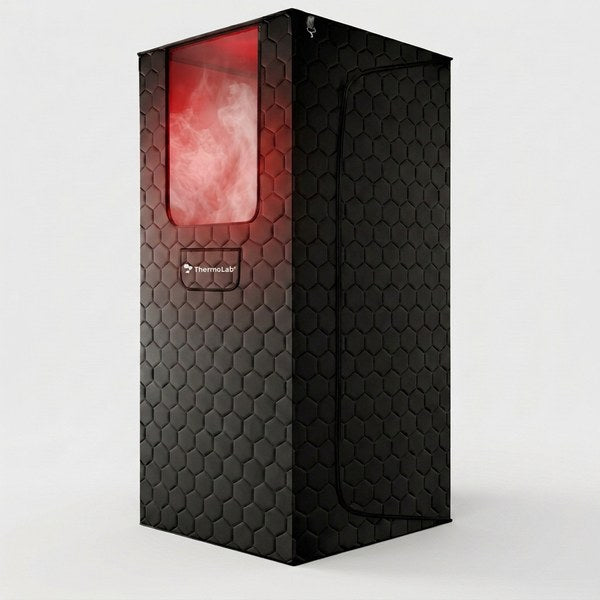
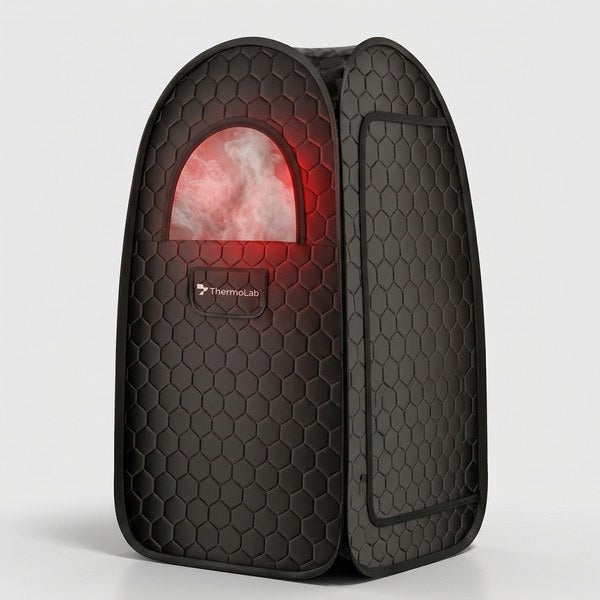
ThermoLab's 6FT Pro Steam Sauna and Pop-Up Steam Sauna are both designed for home use and heat up quickly, making them practical anchors for a contrast therapy routine. Pair with a cold shower, outdoor plunge, or a dedicated cold tub to complete the protocol.
If you're new to either heat or cold exposure, build up gradually — start with shorter durations in both and increase over several weeks as your tolerance develops. Contrast therapy is one of those recovery tools where the adaptation itself is part of the benefit.
The Bottom Line
Contrast therapy sits at the intersection of ancient practice and modern sports science. The evidence for faster recovery, reduced inflammation, improved cardiovascular markers, and better mental health is compelling and growing. For anyone with access to a sauna and cold water, it represents one of the highest-return recovery protocols available — and one that costs nothing per session once you have the equipment.

